
Finding Solon Residents
There is no single official list of every person in Solon. A dependable search uses the record that fits the question. A street address is best paired with the Cuyahoga County property application, while a recorded sale belongs in the deed index. A name can be checked against a court case or the state voter tool, but each result has a narrow meaning. A resident record may show an owner, a party to a filing, a registered voter, or a historic listed occupant. It does not automatically establish a current household.
Begin with the clue that is least likely to change. Keep the exact spelling, a middle initial, a parcel number, a case number, or an old address as the search moves between Solon and Cuyahoga County. That small habit helps separate people with similar names and makes an older record easier to verify at the right counter.
- Use MyPlace to search a Solon parcel by owner, parcel number, or address.
- Open the parcel's transfer and document links, then verify the recorded instrument in the Official Records Search.
- For a name-led question, try Ohio My Voter Information with the required name and Cuyahoga County fields.
- Compare a relevant court result or historical directory entry with the address and dates already collected.
- When an online index is incomplete, ask the city, county, library, or court custodian for the record held there.
Note: A match is a lead to compare, not permission to contact or track another person.
Solon MyPlace Record Clues
MyPlace is the fastest county starting point for an address in Solon. Select the city first, then choose owner, parcel, or address searching. A selected result opens property-level material such as General Information, Transfers, Values, Land, Building Information, Permits, Tax By Year, Legal Recordings, Activity, and map controls. The address-download feature can help organize a defined set of property results, but it is not evidence of household membership.
| MyPlace field | Input | Best use |
|---|---|---|
| City | Selection | Choose Solon before a property search. |
| Owner | Text | Find a property connection for a known name. |
| Parcel | Identifier | Return to one specific parcel. |
| Address | Text | Start an address-led property trail. |
The MyPlace property search is shown below. The county describes it as a free public service, while also warning that the originating office record controls when information differs.
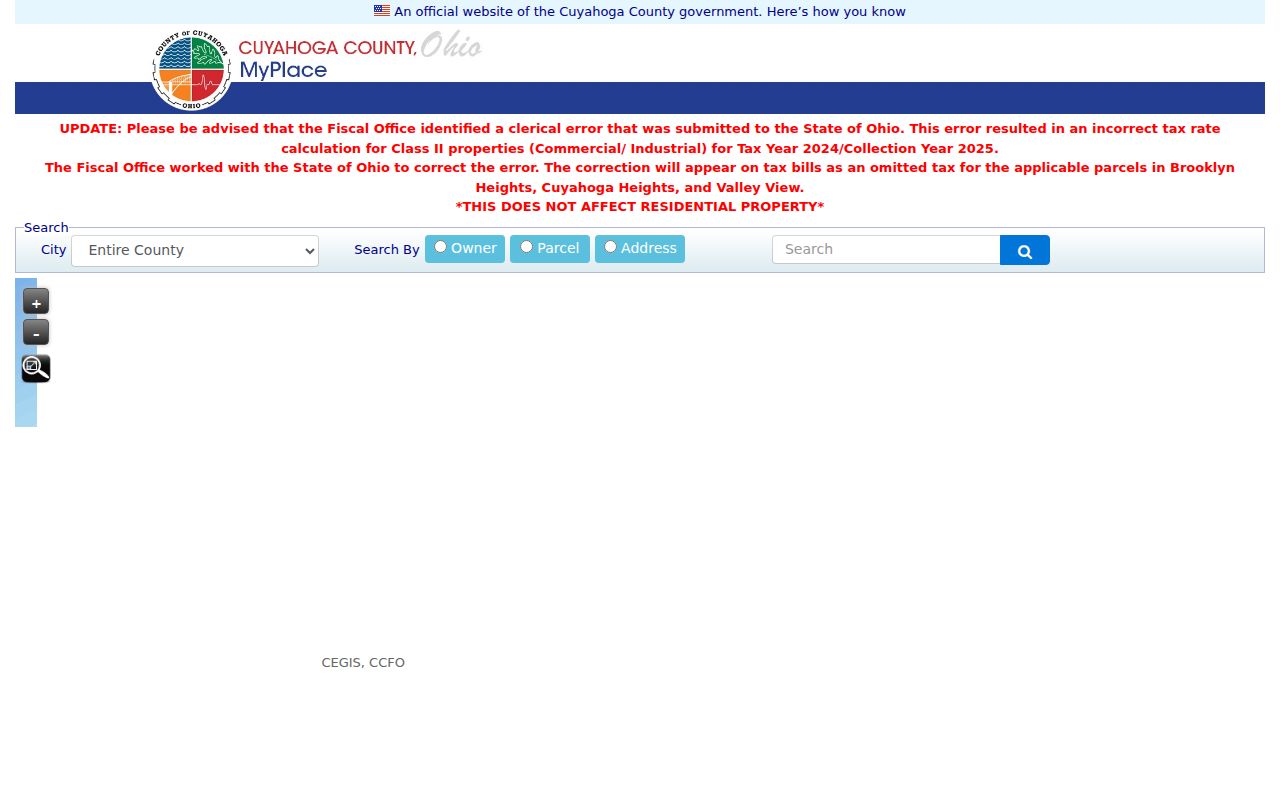
That distinction matters in Solon: a parcel screen is a useful bridge to the Recorder, not a substitute for the recorded document itself.
Solon Deed Index Since 1810
The Cuyahoga County Fiscal Office says its recorded-document search reaches from 1810 to the present. Its Quick Search accepts a term for a grantor, grantee, subdivision, document type, or document number, plus a recorded-date range. The page also offers index-only searching and an index-and-full-text OCR option. For a Solon property trail, the advanced form is more precise because it separates party names, grantor, grantee, recorded and instrument dates, document type, parcel ID, property address, volume, page, and legal-description fields.
Cuyahoga's Official Records Search is the source shown here. Preserve a parcel ID with its dashes, use dates in the displayed format, and compare the property address with the legal description before treating two documents as the same place.
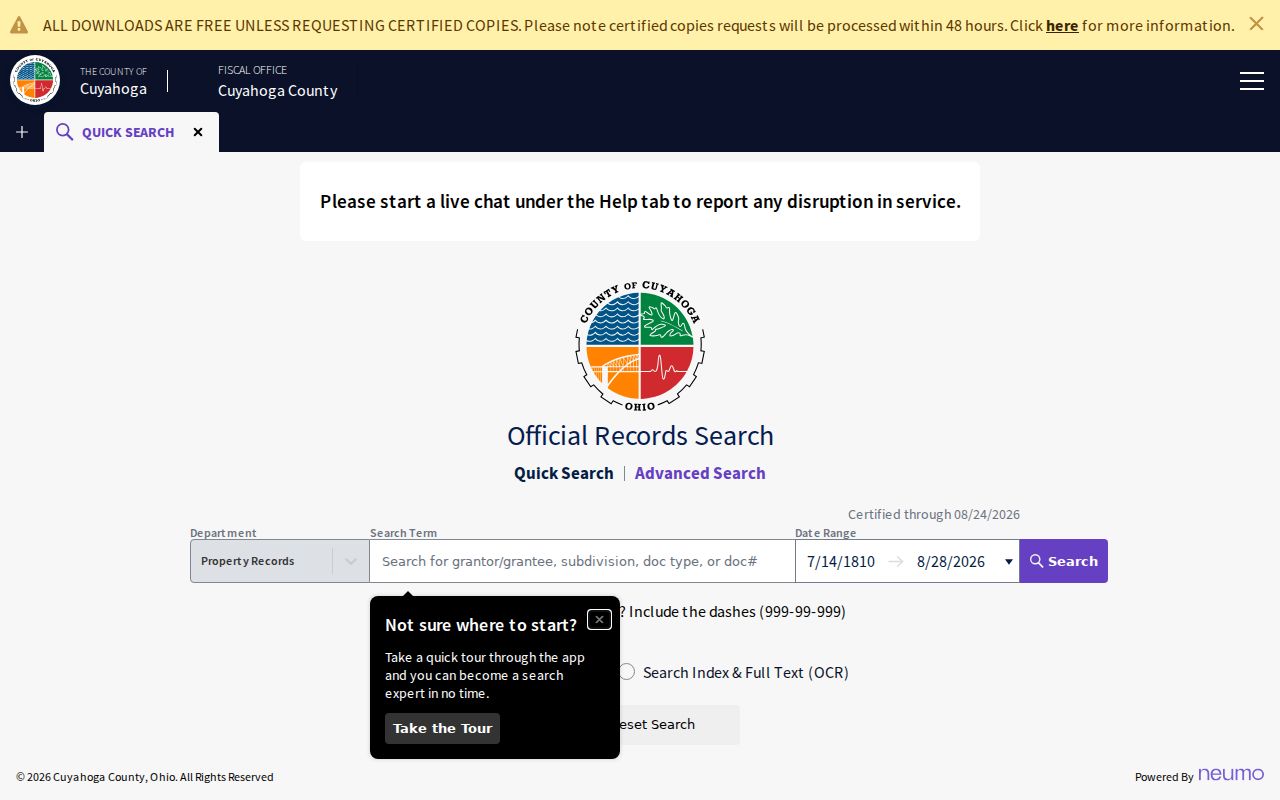
The index can identify parties and recordings. A copy is obtained through the Fiscal Office, where the published schedule lists $2 per page plus $2 for certification.
Solon Resident Record Offices
Solon research crosses several custodians because the city is in Cuyahoga County and Cleveland is the county seat. The Recorder is the authority for recorded instruments. The Fiscal Office property tool supplies parcel context. The state runs the voter lookup, while Solon City Hall is the practical route for municipal planning, building, police, and meeting records not exposed in a public index.
Recorded Documents
2079 E. Ninth Street, fourth floor
Cleveland, OH 44115
216-443-7420
Fiscal Office Property
County parcel and tax records
Cuyahoga County, Ohio
216-443-7300 for tax records
Ohio's public-access fallback is ORC 149.43. It allows inspection at reasonable times and copies at cost, but exemptions and redactions still apply.
The Ohio Public Records Act text is captured below. It is useful when a city or county portal does not display the historic item needed for a Solon search.
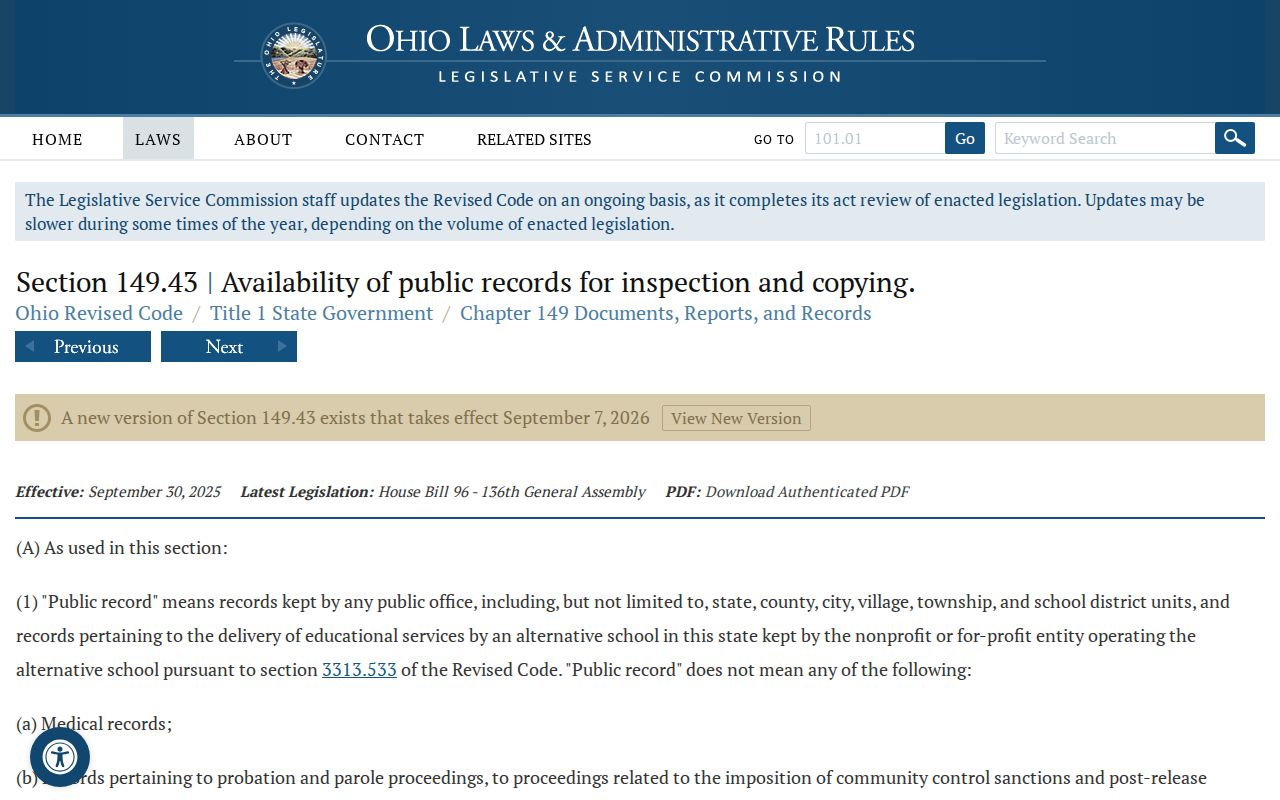
A request may be made without identifying the requester or stating a purpose after the office gives the statutory notice, although a focused written description can help locate a record.
Solon Court and Voter Checks
For a named person, court and voter sources can corroborate an identity without becoming a broad residents directory. Solon's Mayor's Court form permits first name, last name, case number, case type, ticket number, date of offense, and court date. Its results label last and first name, ticket number, offense date, case number, case type, and court date. A Solon citation that cannot be waived may be in Bedford Municipal Court instead, so an empty Mayor's Court result is not conclusive.
Cuyahoga Common Pleas docket searches by defendant name or case number after its terms screen. Some documents are unavailable remotely. Ohio My Voter Information requires first name, last name, and county, then may offer a street selection to narrow a result. It returns registration and precinct context, not ballot choices or a street-wide household list.
The Common Pleas docket is shown below. Keep a case number and party role with the result, because shared names alone are not enough to join records.
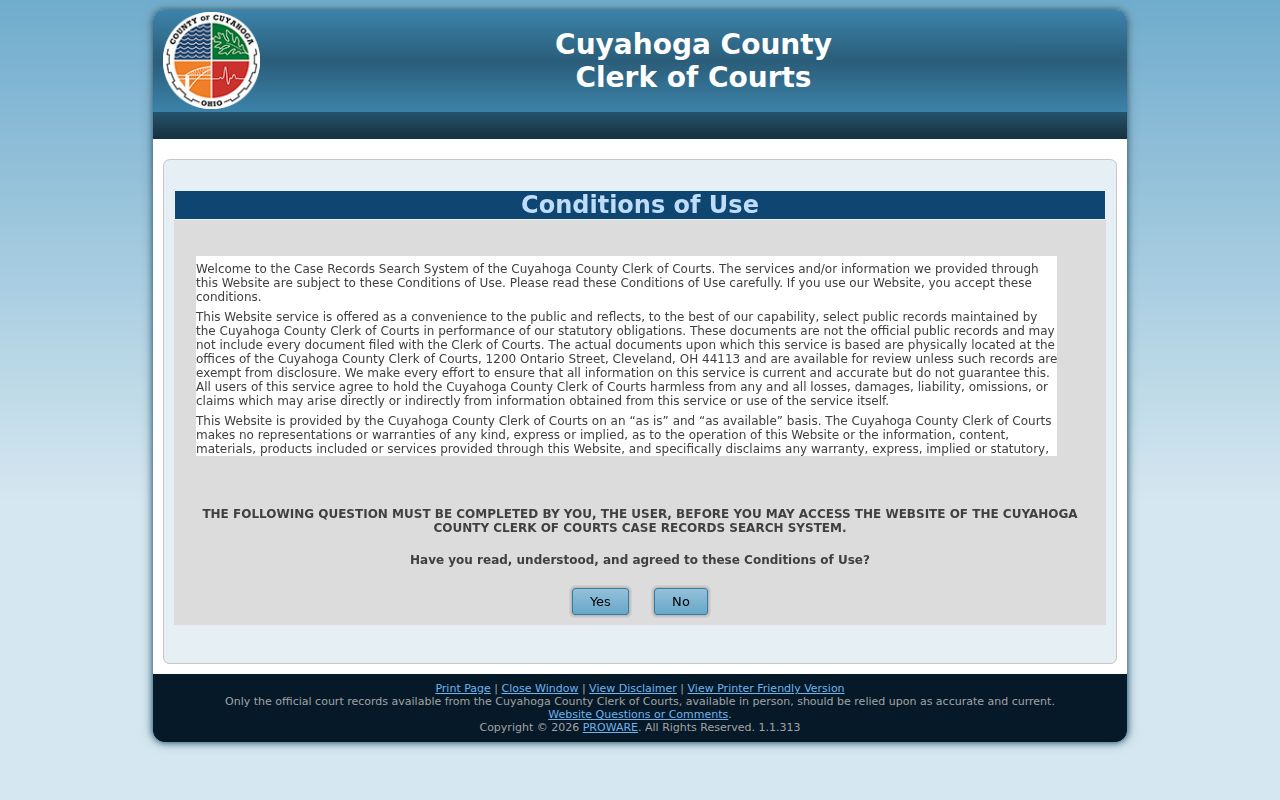
Court and voter results work best as one confirmation point in a larger Solon record trail, alongside a parcel, deed, or historical notice.
Solon Requests Beyond Online Records
The City of Solon's public-record request route is the local fallback for a known building file, planning file, City Council material, cemetery question, or another city-held item that does not have a public search screen. The form can be submitted online or returned in person, by mail, or by email. It lets the requester select email, regular mail, pickup, or another delivery choice, and the listed identity and contact fields are optional.
Solon's open-records request channel appears below. State the department, record type, address or name, and date span whenever those facts are known.
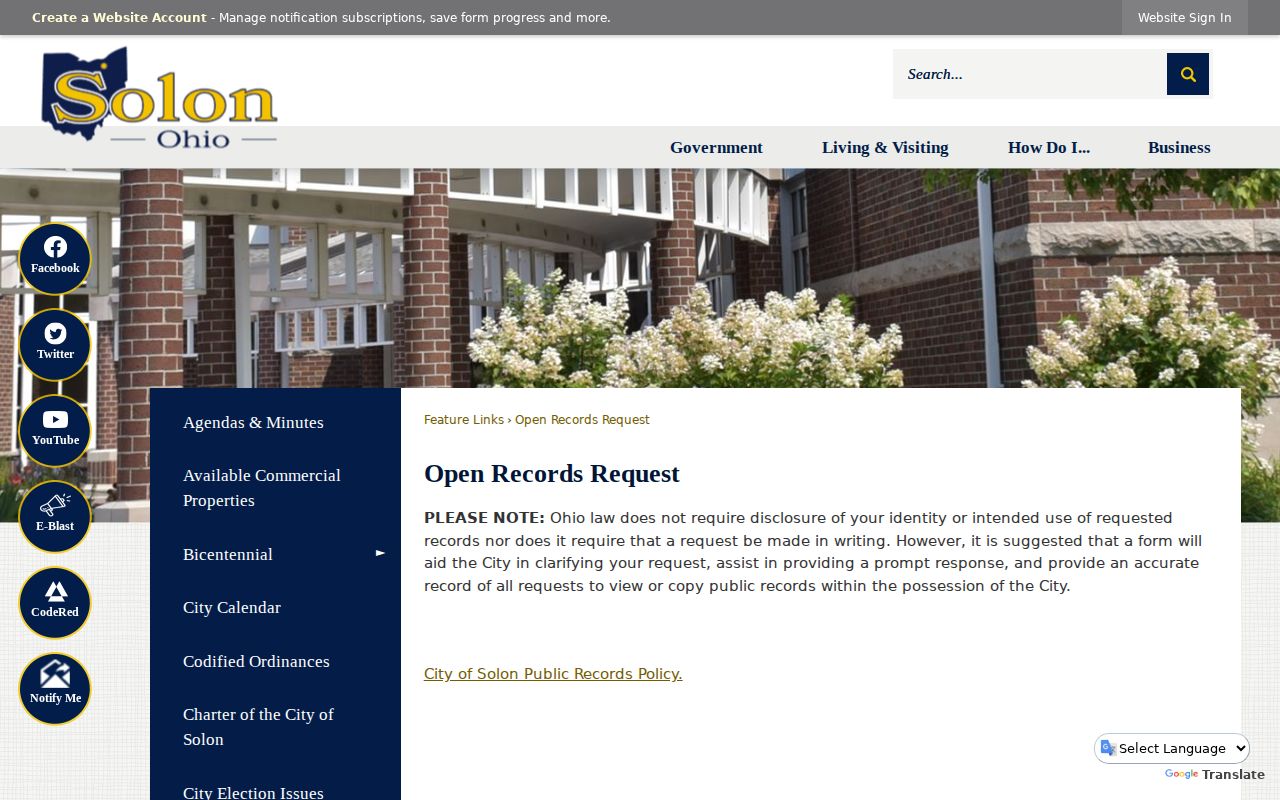
City Archive searches can also use a keyword, archive category, time period, start date, and end date for council and planning material. A precise request helps avoid guessing from an incomplete index.
Current Solon Resident Directories
Current sources do not all prove the same thing. MyPlace connects an owner to a parcel, the Recorder names parties to transactions, and the voter tool provides a registration clue for a specific search. Solon's staff directory lists public employees and departments, not private households. Use each source for its defined purpose, then visit the custodian when a certified or complete record is needed.
| Solon source | What it can confirm | Custodian | Access route |
|---|---|---|---|
| MyPlace parcel | Owner and property relationship | Fiscal Office | Owner, parcel, or address search |
| Recorded documents | Party to a deed or filing | Recorded Documents | 1810-present index |
| Voter lookup | Registration and precinct clue | Ohio Secretary of State | Required name and county |
| City staff directory | Public employee or department | City of Solon | Category, first name, last name |
| Probate and notices | Estate or historical family context | Probate, library, archives | Collection and counter channels |
When the goal is to distinguish one person from another, the name-led order of checks is described on the Solon resident lookup page.
Solon Purpose-Specific Lookups
Some statewide tools are useful only for their stated record type. Ohio eLicense verifies professional credential status, and the Secretary of State business search returns entity and statutory-agent information. Neither is proof of a private home address. The Department of Rehabilitation and Correction search can use name, county, residential county, ZIP code, status, offender number, and a hearing-date field, but it warns that an address may lag and an at-large address is the last recorded one.
Ohio's DRC Offender Search is shown below. It is a custody or supervision record, not an all-residents roll for Solon.
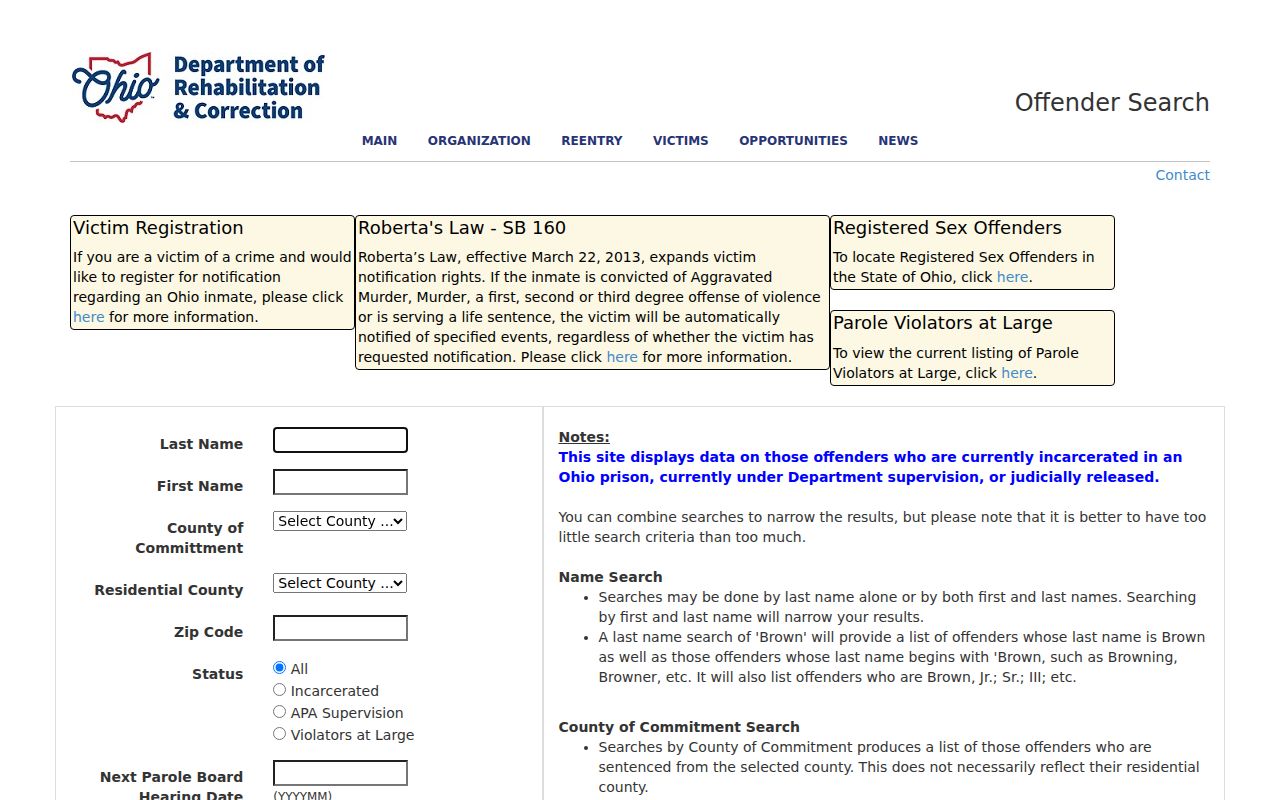
Ohio eLicense and the business search are similarly limited to the records each program keeps.
Solon Record Confirmation
A directory-style result should be verified at the office that owns the underlying record. That is especially true when a search combines information from different time periods or people with a common name. The strongest Solon trail keeps the parcel, document, case, or collection reference beside the result, then checks it against the related custodian source.
Official custodian source
States what that office records, such as a parcel, recorded transaction, registration status, or case event.
It can be checked through the office, portal, counter, or request process.
Compiled directory result
May provide a starting point, but its coverage, update schedule, and source trail can be unclear.
Use it only as a lead, then confirm the relevant Solon fact through an official custodian.
For historical work, the same rule applies to a directory volume. A listing may support a research lead only after its title page confirms the relevant area and year.
Solon Address Privacy Limits
Not every missing result is an error. Ohio's Safe at Home program can provide a substitute address for eligible participants and offers a route to protect a real-property address. Voter and municipal records may therefore omit or mask information that might otherwise appear. Sealed, juvenile, adoption, sensitive-victim, and other protected court material can also be unavailable in a remote search.
For an apparent public-record error, ask the source office for correction. For a withholding or redaction, ask the custodian to identify the authority for its decision rather than trying to fill the gap with assumptions.
Solon Maps and Record History
Address research in Solon is easier when the record is read in the period it describes. Solon began as township territory in the Connecticut Western Reserve, with settlement near present Aurora Road in 1820. The city later developed through residential subdivisions and industrial land, so an old map, a modern parcel, and a current mailing address may not use the same description. Cuyahoga County's property guide specifically advises researchers to retain dimensions, street names, parcel identifiers, and legal descriptions because each can change over time.
The public mapping layer has its own local history. Solon says it began using geographic information systems in the late 1990s, opened a public interface in 2005, and replaced it with improved functionality in February 2011. The City map is a sound way to orient a Solon search and see parcel geography. Ownership still needs confirmation through MyPlace and the Recorder, whose recorded documents carry the legal description and named parties.
For a much older property question, use the county's access channels in sequence. The Archives holds original map volumes from about 1860 through 1945. The Fiscal Office Map Room has maps from about 1945 forward, and the Archives holds tax records from 1819 through 1986. Suburban atlases from 1852, 1874, 1892, and 1903 are particularly useful for a Solon property that predates its current built setting. County property research requires an appointment in person.
These layers also explain why a number alone can fail. A parcel number and legal description make a better handoff from one Solon source to the next. They are stable reference points when a road name, subdivision, or mailing practice has changed.
Solon Library and Family Trails
Historical evidence in Solon is regional. Cleveland Public Library has Cleveland directories from 1837 through 1977, the complete Cleveland East Suburban Directory run from 1964 through 1979, and Greater Cleveland Criss-Cross volumes for 1923, 1926, and 1960 to the then-current year. A title page must be checked before a volume is treated as Solon coverage. The Solon Branch offers public computers, and CCPL points researchers toward genealogy databases, obituaries, FamilySearch material, and Sanborn maps.
- Parcel
- A county identifier for a piece of real property.
- Index
- A search list that points to a record or document rather than replacing it.
- Criss-cross directory
- An address-oriented volume that may list an occupant after coverage is confirmed.
- Roll
- A defined list kept for a particular public purpose, not a census of all residents.
For an estate or family trail, Cuyahoga Probate channels and historical notices can provide later context. The important first question is whether the particular collection covers Solon in the needed year.
Historical Solon Resident Directories
Printed city directories can place a household in a year, but the regional collections should not be mistaken for a continuous standalone Solon run. In a qualifying volume, entries may show a surname first, initials or given names, a residence marked with a lower-case h, and sometimes work or spouse context. The volume's own abbreviation page is the safest way to interpret marks such as r, bds, or wid.
The County Archives is an additional repository for regional directories, maps, and tax material. It holds tax records from 1819 through 1986 and suburban atlases for 1852, 1874, 1892, and 1903. Appointments are required for in-person property research. The fuller collection-by-collection treatment is in the Solon directory book.
Solon Property Record Safety
Solon's long online deed index is valuable, but it also makes direct verification important. On February 6, 2025, Cuyahoga County warned about property-tax scam calls seeking immediate payment and banking or card details. The County said its employees may call delinquent owners about options but do not request that financial information by phone. A filing, image, or tax bill should be checked through the named custodian before money or personal information changes hands.
Ohio's professional-license lookup is shown below as one example of a purpose-specific state verification tool. It can confirm a regulated credential, but it does not settle a Solon address question.
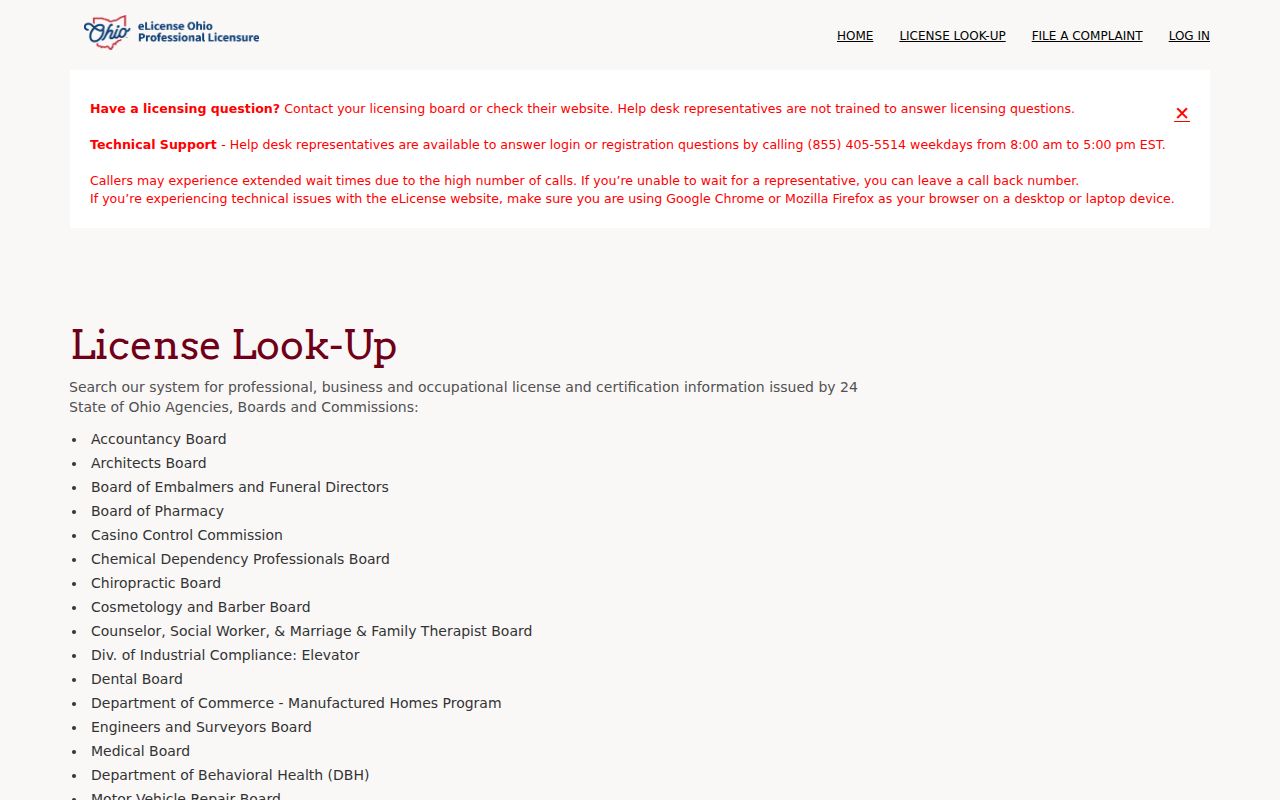
For a potential filing issue, the Fiscal Office also advertises Property Alert. Keep the recorded-document number and contact the Recorder or Fiscal Office through its official channel.
A careful Solon records search leaves a short trail of sources: the address or parcel searched, the recording or case number found, the date checked, and the custodian that supplied it. That trail makes it possible to revisit a result when an online database is updated, a document image is unavailable, or the name needs another point of confirmation. It also keeps a useful distinction clear: an index helps locate a record, while the responsible public office is the place to verify it.