
Solon City Directory Collections at Regional Libraries
Solon directory research begins with regional collections, not a presumed local title. No authoritative source in the collection survey documented a continuous standalone Solon run. Cleveland Public Library, or CPL, holds several useful series, but suburb coverage varies by volume. From 1925 onward, the title pages identify covered suburbs. That check comes before treating a name or address as a Solon listing. The table separates the available Solon runs from the access question, which is just as important when a particular year is missing.
| Collection | Years | Where held | Access and coverage |
|---|---|---|---|
| Cleveland directories | 1837-1977 | CPL Center for Local and Global History | Complete microfilm set; verify each volume's suburban coverage. |
| Cleveland East Suburban Directory | 1964-1979 | CPL | Complete microfilm run; a strong postwar Solon lead after volume-by-volume confirmation. |
| Greater Cleveland Criss-Cross | 1923, 1926, 1960 to the then-current year | CPL | Address or telephone route to a listed occupant; confirm Solon in the title pages. |
| County Archives directories | 1837-1972, not inclusive | Cuyahoga County Archives | Alternate regional directory repository. |
| WRHS city and suburban directories | 1837-2000 | Western Reserve Historical Society | Reading-room confirmation is required for the relevant volume. |
CPL also reports telephone directories from 1880 forward, though a telephone book is not a complete Solon resident count. When the Solon directory year is uncertain, county tax, map, or appraisal material can help establish the address before a volume is read. A missing Solon name is inconclusive: the right volume may omit the suburb, omit the year, or simply omit the person.
Solon Directory Title-Page Checks
Regional publishing is the central limit on a Solon directory search. CPL says suburb coverage differs from one volume to the next, and its later title pages name the suburbs included. Read that page, the publication year, and any coverage statement before copying an address into a Solon family record. The careful approach avoids turning a Cleveland example into a claim that a whole Solon household was included.
A verified 1879-80 Cleveland directory contains alphabetical private-citizen and business listings, classified businesses, institutions, and a map. It is evidence for how that particular Cleveland volume is arranged. It is not proof that every format or abbreviation applies to a later suburban volume. Note the exact title, date, and page with every transcription.
Note: A title-page check is the fastest way to prevent a regional Solon directory search from starting with the wrong volume.
Solon Directory Research at CCPL
The Solon Branch of Cuyahoga County Public Library provides a practical local stop for a Solon directory search. The branch at 34125 Portz Parkway has public computers and is open Monday through Thursday from 9 to 9, Friday and Saturday from 9 to 5:30, and Sunday from 1 to 5. Its genealogy resources include in-library Ancestry Library Edition, HeritageQuest, African-American Heritage, Heritage Hub, FamilySearch additional content at all branches, Fold3, Ohio Memory scrapbook material, and Sanborn maps.
The Solon Branch listing shows the public-facing library location used for Solon directory research.
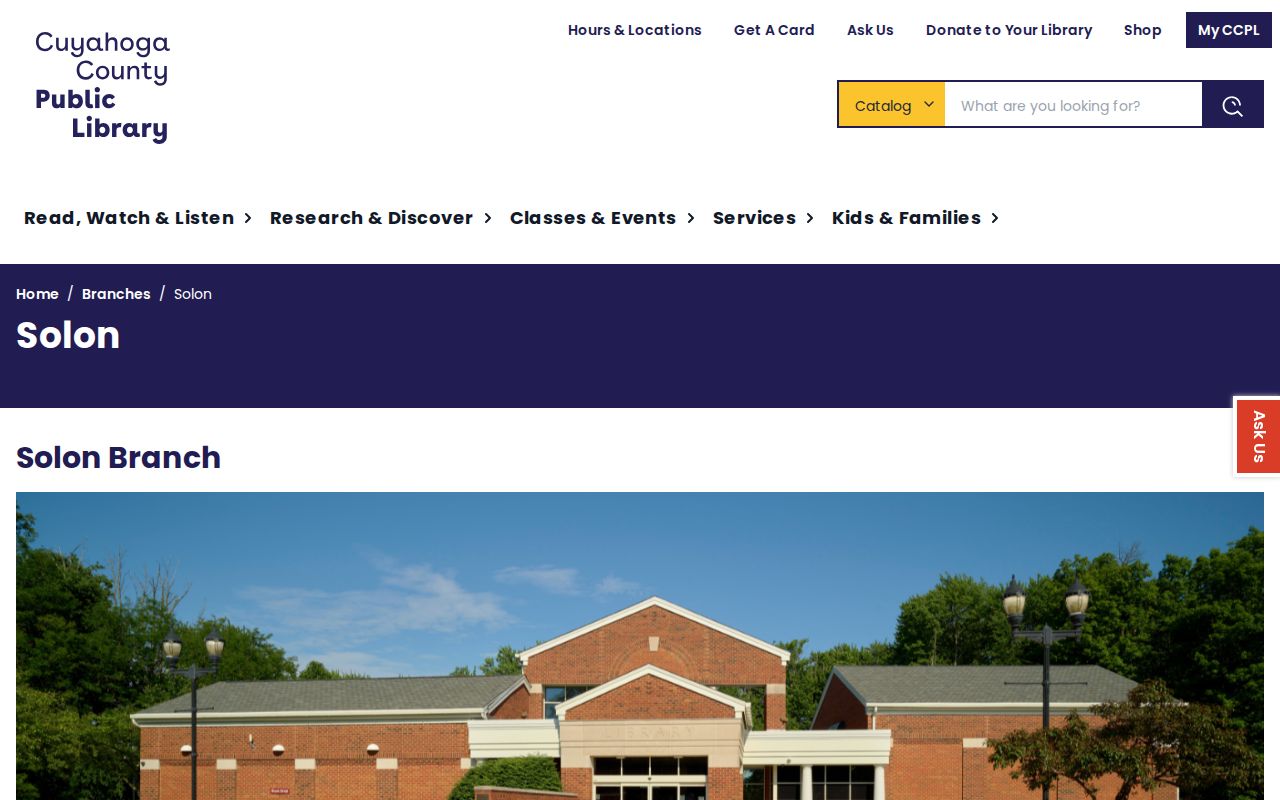
Library databases can extend a name or address found in a directory, while the directory volume itself still supplies the original wording and coverage caveat.
Solon Directories and Historical Society Context
The Solon Historical Society is a local context route for a Solon directory lead. Its collection and archive gateway can help place a surname, road, or neighborhood in Solon history, but contact the society before stating that it holds a particular individual record. That distinction matters because the confirmed directory shelf is regional and its coverage must be tested one volume at a time.
The Historical Society collection gateway is the source for this local context image.
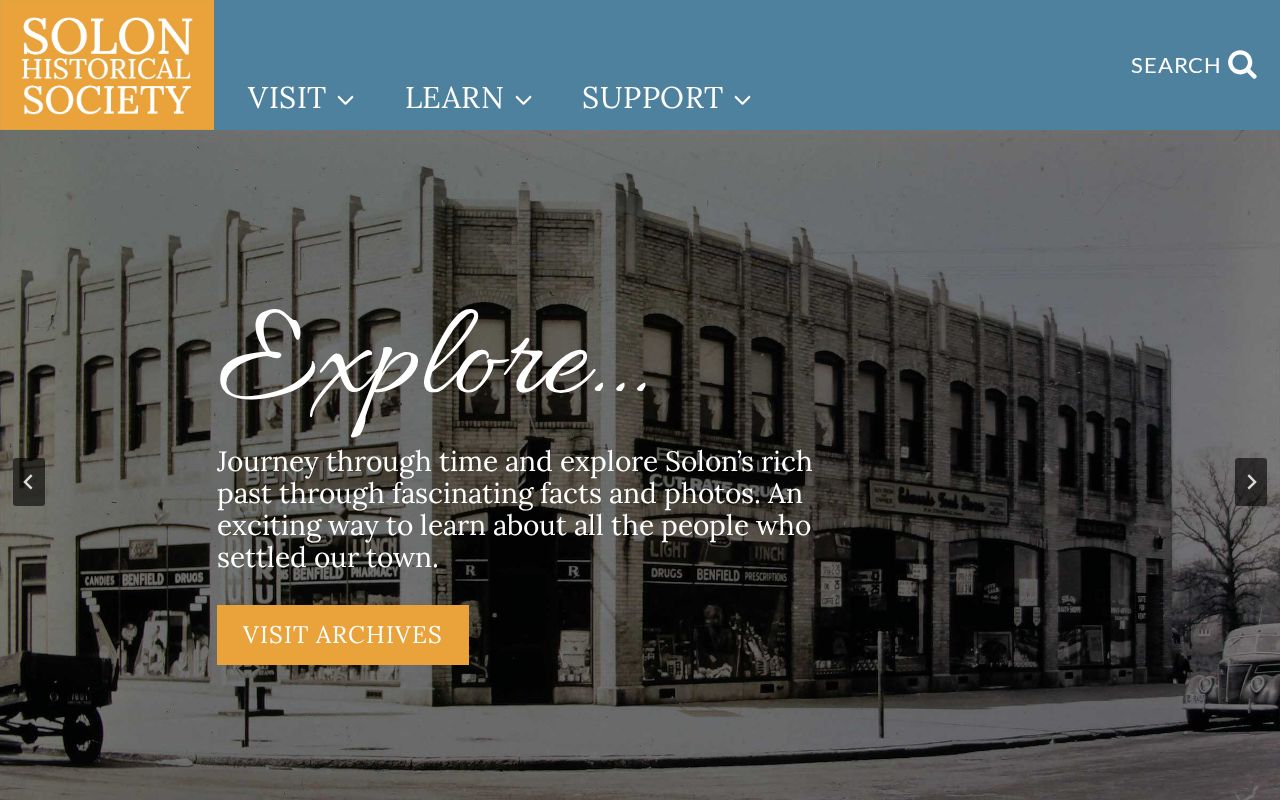
Use a directory address as a question for the archive, not as a substitute for the collection's own holdings or a documented household record.
How a Solon City Directory Entry Reads
Read a Solon directory entry as a transcription from one named volume. In later visible Cleveland entries, names are surname first and may use initials or given names. Spouse information can appear in parentheses, and a lower-case h precedes a residence address. The scans also show r, bds, and wid. No complete authoritative key was captured for every abbreviation, so photograph the abbreviation page from the same Solon-relevant volume before expanding a mark.
| Name form | Surname-first form, initials, or given names exactly as printed. |
|---|---|
| Family notation | A spouse may appear parenthetically in the visible later entries. |
| Residence line | A lower-case h precedes a residence address in the verified sample. |
| Other marks | r, bds, and wid appear in scans; preserve the original mark until its volume key is checked. |
| Volume context | Title, year, page, and suburban-coverage statement keep the entry tied to its source. |
- Criss-cross directory
- An address or telephone arranged directory used to locate a listed occupant after the specific volume's coverage is confirmed.
- Householder index
- An alphabetical arrangement that points to the person or household named in the publication.
- Abbreviation key
- The volume's own explanation of printed marks. Photograph it before interpreting an unfamiliar abbreviation.
Solon Directory Criss-Cross Years
CPL's Greater Cleveland Criss-Cross series has documented dates of 1923, 1926, and 1960 to the then-current year. A criss-cross listing works from an address or telephone number toward a listed occupant, which makes it a useful bridge between a parcel trail and an alphabetical name search. Ordinary qualifying city volumes begin a criss-cross section in 1929. It remains a listed-occupant tool, not a complete account of everyone at an address.
CCPL's genealogy resources are the source for this Solon directory collection view.
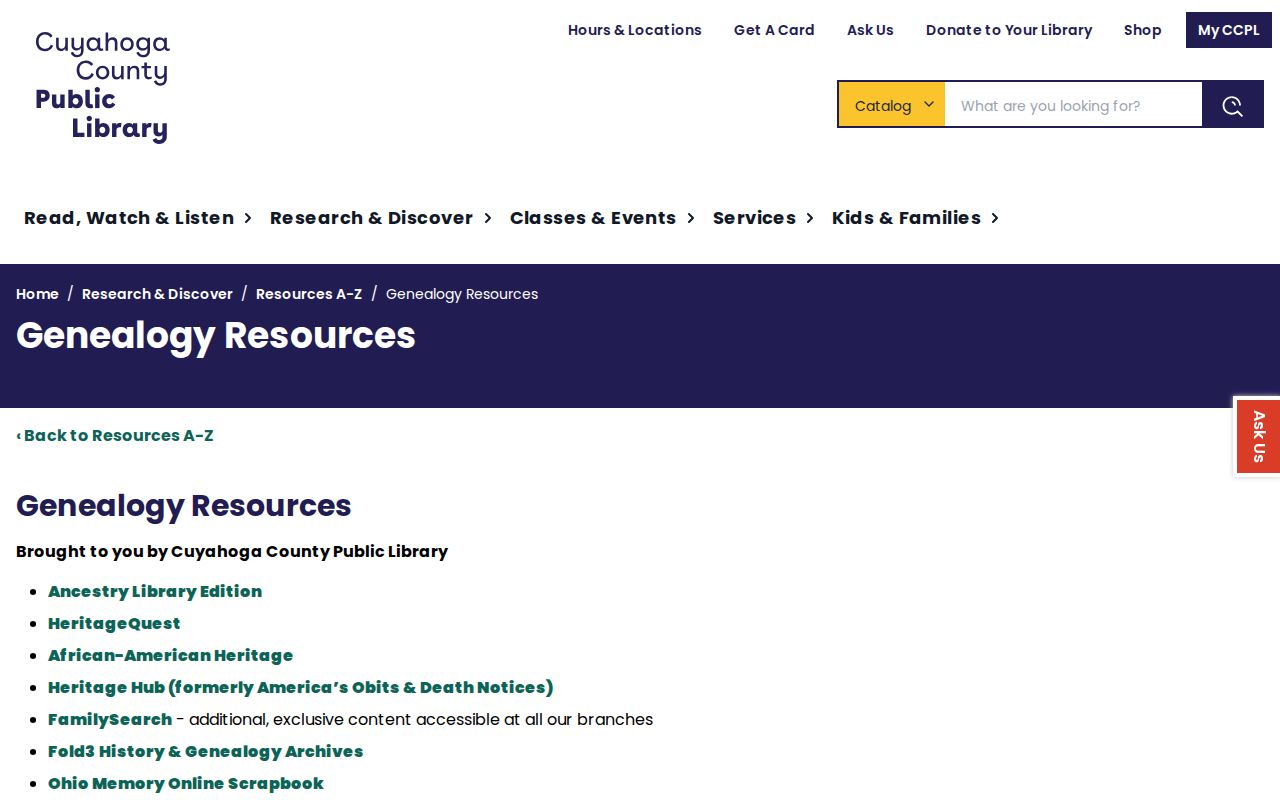
Pair the criss-cross result with the matching alphabetical listing and title page, then preserve the edition date with the address.
Trace Solon City Directory Families
For family history, trace one name and address through verified Solon directory volumes rather than assuming a run is complete. Start with present parcel or address information, use a criss-cross volume for a listed occupant, and inspect the same or nearby alphabetical volumes. The released federal census can bridge longer intervals. Obituary and news indexes, Probate files, marriage and death material, tax and appraisal evidence, and maps can test the Solon path when a directory leaves a gap.
- Confirm that the selected regional volume includes Solon, then transcribe the name and address as printed.
- Check an adjacent or same-year alphabetical listing and retain the title-page coverage statement.
- Follow the address or name into another confirmed directory year, recording every change without filling missing years by guesswork.
- Pair longer gaps with a released federal census and address evidence from tax, appraisal, or map material.
- Use an obituary, probate file, cemetery contact, or other dated family record to test an ending or disappearance.
Directories can show a listed Solon presence, a move, or a changed name form. They cannot by themselves explain why a listing vanishes. A move, death, nonlisting, or changed coverage can all produce the same apparent Solon gap.
Solon Directory Regional Geography
Solon was settled in 1820 in the Connecticut Western Reserve and developed from township geography into a city with postwar growth. That Solon history helps explain why the record trail crosses local, county, and regional shelves. Early roads and rural descriptions can differ from later street and subdivision records. A directory name is therefore more useful when it is paired with the street spelling, map period, and the volume's declared coverage.
County archival series also reach close to county formation, with marriages beginning in 1810, estates in 1813, Common Pleas naturalizations in 1818, tax records around 1819, and deed documentation around 1810. Those sources do not make a directory entry conclusive. They offer dated context for a family trail that begins with a listed Solon address.
Solon Directory Leads to Estate Records
When a Solon directory lead reaches the end of a person's trail, historical notices and estate channels can add context. CCPL points researchers to the Cleveland Necrology File and Cleveland News Index. The County Archives holds estate records from 1813 to 1918, with indexes from 1813 to 1993, as well as marriage applications from 1829 to 1875 and marriage records from 1810 to 1941. These are separate record groups, each with its own access path and limits.
For a local burial question, Solon has Mount Hope and Roselawn municipal cemeteries, but no official public interment-name search was located. The City Service Department at 440-248-5834 is the contact route. A cemetery or Probate result can support a directory trail, while a directory entry remains a dated listing rather than proof of every family relationship.
Note: Keep every source's date beside the name, because directory, estate, and notice records often describe different points in a Solon family's timeline.
Solon Directory Gaps Need Corroboration
Solon directories are strongest when they are read with their limits in view. The confirmed record is regional, publication gaps exist, and no continuous standalone Solon title was verified. A Solon name match can also be a different person. Keep middle initials, address, date, page, and coverage statement together before linking separate entries. For a modern Solon address-centered trail, the previous residents search uses parcel and deed evidence rather than rebuilding the directory shelf.
Western Reserve Historical Society describes a genealogy index with more than 320,000 entries into original church, funeral-home, photograph, and other historical records. It is a route for follow-up, not a claim that every indexed item concerns Solon. The best result combines a confirmed volume, an independent dated record, and a clear note of what remains unknown.